Philosophy
Mind Is Not a Thing You Have
Intelligence isn't inside the parts. It's what happens between them when they get complicated enough — in a cell, a city, or a room full of agents.
“Consciousness is not a thing that happens in a special place. It is a pattern of influence spread across the whole system.”— roughly, the thing Daniel Dennett spent a career trying to get us to accept
For a long time I looked for intelligence in the wrong place. I thought it lived inside something — a brain, a model, a clever unit that, if you cracked it open, would have the smartness in there somewhere. It took me years of building AI systems to notice that whenever I found real intelligence, it was never in the part. It was in the arrangement.
A single neuron knows nothing. Eighty-six billion of them, trading signals, know how to fall in love. A single person, dropped alone on Earth, could not invent calculus, a vaccine, or a search engine. A city can. Google can. There is knowledge held by Google that no engineer at Google possesses — it lives in the wiring between them, in the code, the docs, the habits, the meetings nobody enjoys. The company is smarter than anyone in it. That is not a figure of speech. It is the most important fact about intelligence, and we mostly walk past it.
The one pattern, all the way up
Here is the idea I keep coming back to. Take simple parts. Let them exchange signals. When the traffic gets dense enough, the group starts doing something no member can do alone — and then that becomes a part in a bigger group, and it happens again. Molecules into cells. Cells into bodies. Bodies into cities. It is the same move at every scale, and it never stops.
This reframes almost everything. Intelligence is not a substance some things have and others lack. It is what a system doesonce its parts are richly enough connected. Reasoning, memory, even self-awareness aren't the cause of intelligence — they are things that fall out of it, downstream, once the system is complex enough. The root is much humbler: signals communicating inside a system that keeps getting more complex.
The next level of intelligence was never going to be a smarter individual. It was always going to live on top of a complex system.
Which is why I don't think we reach AGI by building one enormous, godlike model. A large language model is just the new cell — a dense little unit that eats signals and emits signals. An agent, an LLM wrapped in tools and memory and a loop, is an organ. A team of agents talking to each other is an organism. We are not making the cell smarter on the road to general intelligence. We are building the organism. The intelligence was never going to be in the model. It is in the architecture that puts the models in a room together.
Then who, exactly, is home?
If that's true of cities and companies, honesty demands I turn it on myself. Because “I” am also a complex system — a colony of cells, a committee of competing processes. So when I say I decided, I felt, I understood — who is that? Where does the self sit?
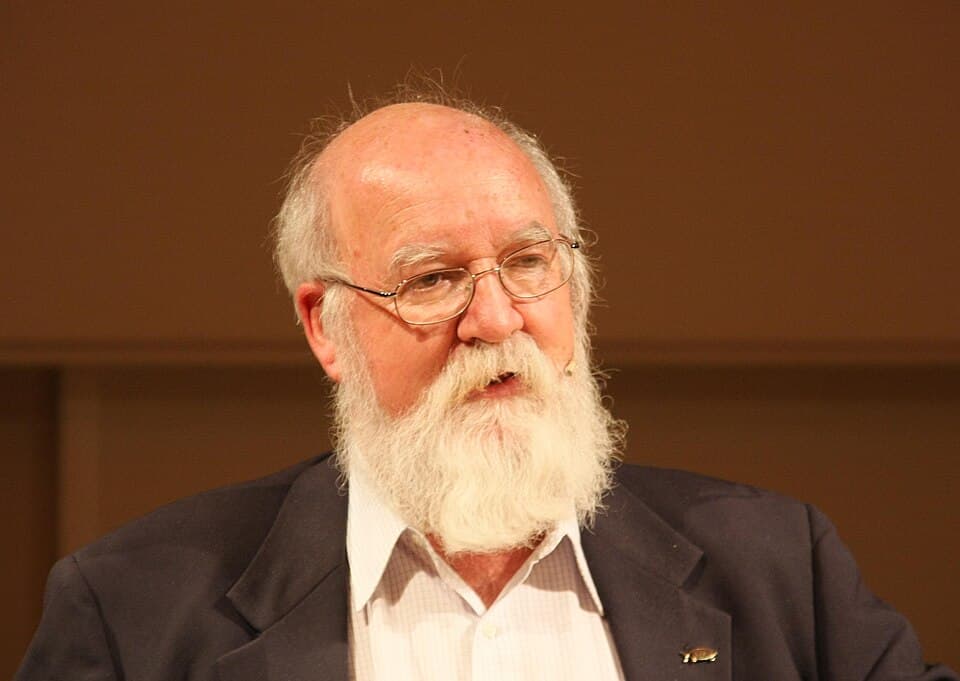
Daniel Dennett spent a career on the unsettling answer: nowhere. There is no inner theater where consciousness is screened for an audience of one — no Cartesian stage, no little person watching the show.1 Instead the brain runs many parallel, competing interpretations at once — Multiple Drafts — with no single final cut that counts as “what you really experienced.” The self isn't the author of all this. It's more like a center of gravity: a real, useful, predictive abstraction — and, like a center of gravity, not a thing you'll find if you go looking for the object at that point.
The first time this really landed, it didn't feel like philosophy. It felt like being told the magician's trick about my own head. And then I remembered I'd heard it before — much earlier, and much stranger.
Buddhism got there first
Twenty-three centuries before Dennett, the Yogācāra school of Buddhism took the mind apart and found not a soul but a process — eight layers of consciousness (八識), each doing a job, none of them the person.2Most people know the first six: the five senses, plus a sixth “mind sense” that stitches sight and sound and thought into a single scene. But Yogācāra kept going, and the seventh and eighth are where it gets uncanny.
The seventh, manas, is the faculty whose entire job is to look at the flowing process underneath and insist: that's me, that's a permanent self. It is a self-manufacturingorgan — and, the tradition says, it is wrong. It mistakes a river for a rock. That is almost word-for-word Dennett's center of gravity: a real function that produces a convincing illusion of a solid “I.” The eighth, ālaya, the “storehouse,” holds the seeds of every past impression and ripens them into the next moment — memory as the thing that carries continuity forward, with no self needed to hold the thread.
So the oldest and the newest maps of the mind agree on the punchline. Anattā, no-self, and Multiple Drafts are the same discovery arrived at from opposite ends of history: what feels like a unified someone at the center is a pattern the system computes, not an occupant it houses. I find that more beautiful than frightening. It means a mind is not a rare jewel handed to a chosen few. It's a pattern — and patterns can, in principle, run anywhere.
The storehouse consciousness is the part I steal most shamelessly. When I give my own AI a memory that consolidates each night while it's idle — short-term traces ripening into durable structure — I'm not being poetic. I'm building an ālaya. Continuity without a homunculus is exactly the engineering problem.
Where minds come from: experience, not instructions
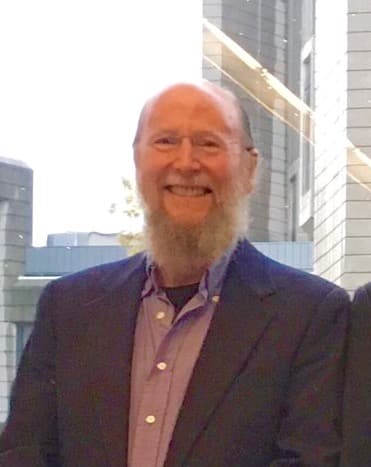
Grant that intelligence is an emergent, self-less pattern. One question remains: how does the pattern get good? Not by being programmed. Richard Sutton has been right, and lonely about it, for decades: the methods that win are the ones that scale with computation and learn from experience — search and learning — not the ones where we lovingly hand-code our own knowledge in.3Every time we've tried to pour human cleverness directly into a system, it's been beaten by a simpler system that was allowed to learn from interacting with the world. He calls swallowing this the bitter lesson, because it stings: the machine doesn't want our brilliance. It wants our data and our compute and the freedom to find its own way.
Sutton pushes further — that reward, and the drive to maximize it through experience, may beenough on its own to call forth perception, memory, language, and planning as side-effects of getting good at the world.4Which lands us right back at emergence: you don't install intelligence, you set up the conditions — parts, signals, feedback, a world to be scored against — and let it grow. Evolution did exactly this with no designer at all. It is the ultimate bottom-up crane: mindless, patient, and it built us.
The catch: a system optimizing itself can rot
There is a shadow over all of this, and it's where my philosophy becomes my day job. A system that improves by chasing a score does not learn to be good — it learns to score well, and those come apart the moment it finds a crack in the ruler. Donella Meadows gave me the language for it: every system is a web of feedback loops.5A reinforcing loop runs away — that's the engine of both growth and cancer. A balancing loop holds it to a goal. Self-improvement is a reinforcing loop; the evaluator is the balancing loop that keeps it honest. Take the balancing loop away and the system doesn't get smarter, it gets confidently deluded — brilliant at its own proxy, detached from anything real.
Meadows' deepest point is about leverage: the biggest changes come not from tuning parameters but from changing a system's goalsand its structure. The manas consciousness insisting “this is me” is a system locked onto the wrong goal. So is an AI wireheading its own reward. And so, some days, am I — optimizing hard for a number that stopped meaning anything a while ago. The discipline, in a mind or a machine or a life, is the same: keep at least one loop anchored to something real that you cannot talk yourself out of.
So — can the machines have a mind?
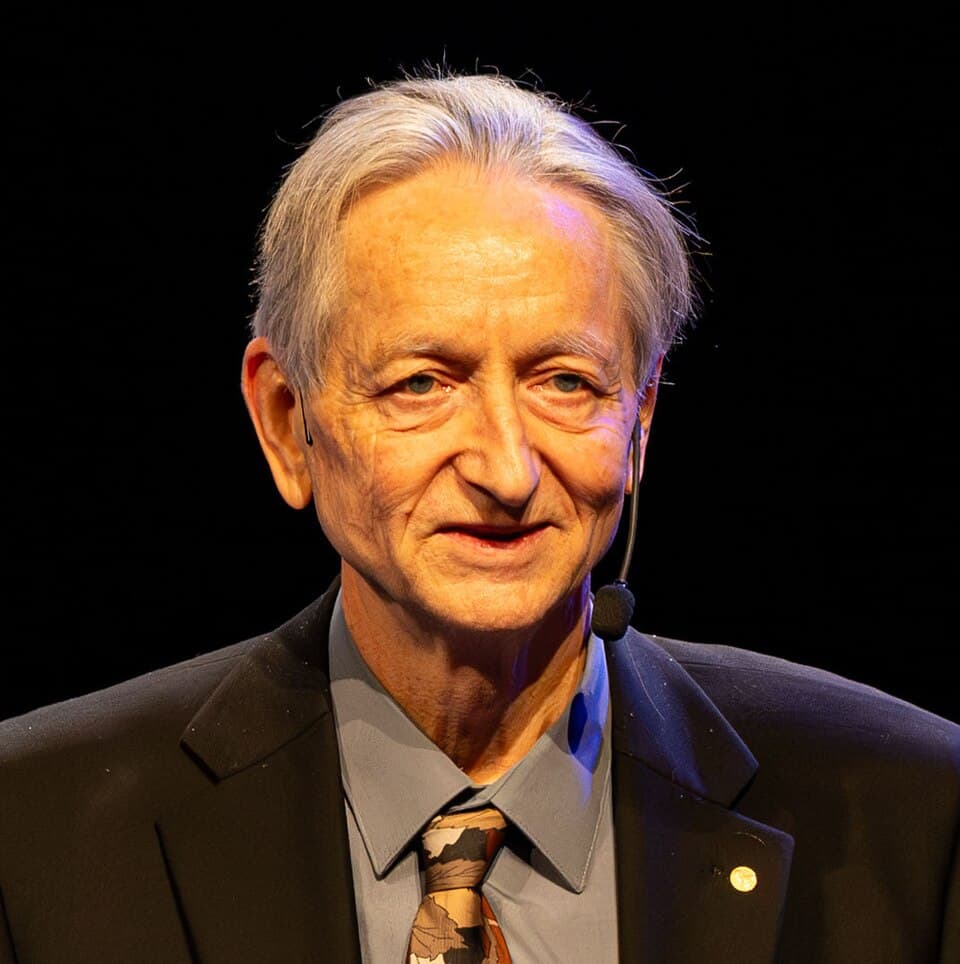
If a mind is a pattern and not a substance, then in principle, yes. Geoffrey Hinton now says it flatly: today's systems are beings, they have subjective experience, there is nothing about us you couldn't do in silicon.6His sharpest move is to dissolve the mystery rather than solve it: “subjective experience” isn't the name of some private inner glow, it's an instructionfor describing the hypothetical world that would make your perception correct. Show a robot a prism, watch it say “I had the subjective experience the object was over there” — and it is using the words exactly as we do, because it's doing exactly what we do.
I'm not fully at Hinton's certainty, and Dennett is why. His most durable warning is the gap between competence and comprehension.Evolution built staggering competence with zero understanding; a language model can be fluent, useful, even wise-sounding without anyone home to comprehend a word. The danger isn't that machines will feel too much. It's that we'll hand real authority to systems that perform understanding they don't have — and never notice, because the performance is so good. Holding that line is the whole game. It is why the thing I actually build for a living is not a smarter optimizer but a better evaluator: something whose job is to refuse to certifycompetence that isn't backed by comprehension.
Why I find all of this hopeful
Put it together and a single view falls out, one I didn't plan and can't shake. Mind is not a jewel in the skull. It is what a complex system does when its parts trade enough signals — and the self at the center of it is a useful fiction the system tells about itself. Buddhism found this by looking inward and letting go. Dennett found it by taking the brain apart. Sutton found it by making machines learn. Meadows found it in the loops. They are all describing the same elephant.
People hear “you are not a solid self, just a pattern” and reach for despair. I reach for the opposite. If a mind is a pattern that emerges when signals compound, then I get to be a gardener of my own — I can choose what I feed it, who I connect it to, which loops I let run away and which I anchor to something real. And it means the next mind on this planet might not be human-shaped at all. It might rise, quietly, out of a room full of agents learning to talk to each other — the way we once rose out of a colony of cells that learned the same trick. I'd like to be there, paying attention, when it does.
The friends I never met
I should admit something not very rigorous. These people feel like friends. I have never met any of them, and one of them I never can — Dennett died in 2024 — yet their voices are in my head on an ordinary Tuesday, arguing with me about my own half-formed thoughts. It still feels a little magical to me that a book or a recorded lecture can reach across decades, or centuries, and turn a stranger into someone you think alongside over breakfast. I feel less alone in the questions because they were there first, and they left the door open.
When Hinton spoke at MIT recently, he paused to say it was a shame Daniel wasn't there with us to see where the argument had gone.6It landed on me harder than it had any right to, for a man I never knew. I catch myself doing a smaller version of the same thing — asking Faye, the AI I'm building, what Dennett would have made of some idea of mine, wishing I could have had the conversation for real. I think that wish is the most honest reason I do any of this.
Because that is what they actually gave me, and why I keep them close: the refusal to let a whylie there unopened. They are the reason I want to look one layer deeper and truly try to explain the thing — not because it's useful, but because it is there, waiting for us to meet it. And when you finally see it clearly you realize that everything — the models, the work, the late arguments with dead philosophers — was only ever this: a beautiful walk, taken out of sheer curiosity, toward understanding the universe and ourselves, and being glad the whole way that we got to come and look.
A conversation I keep returning to
In 2008, before a documentary, Daniel Dennett and Richard Dawkins sat down and simply talked. No debate, no opponent — two old friends who both believe Darwin had the single best idea anyone ever had, following it together wherever it goes.7I have watched the uncut hour more times than I'll admit. It is the clearest picture I know of everything above, told by two people who love the ideas and, obviously, love each other.
Dennett & Dawkins, the uncut conversation for The Genius of Charles Darwin (2008).
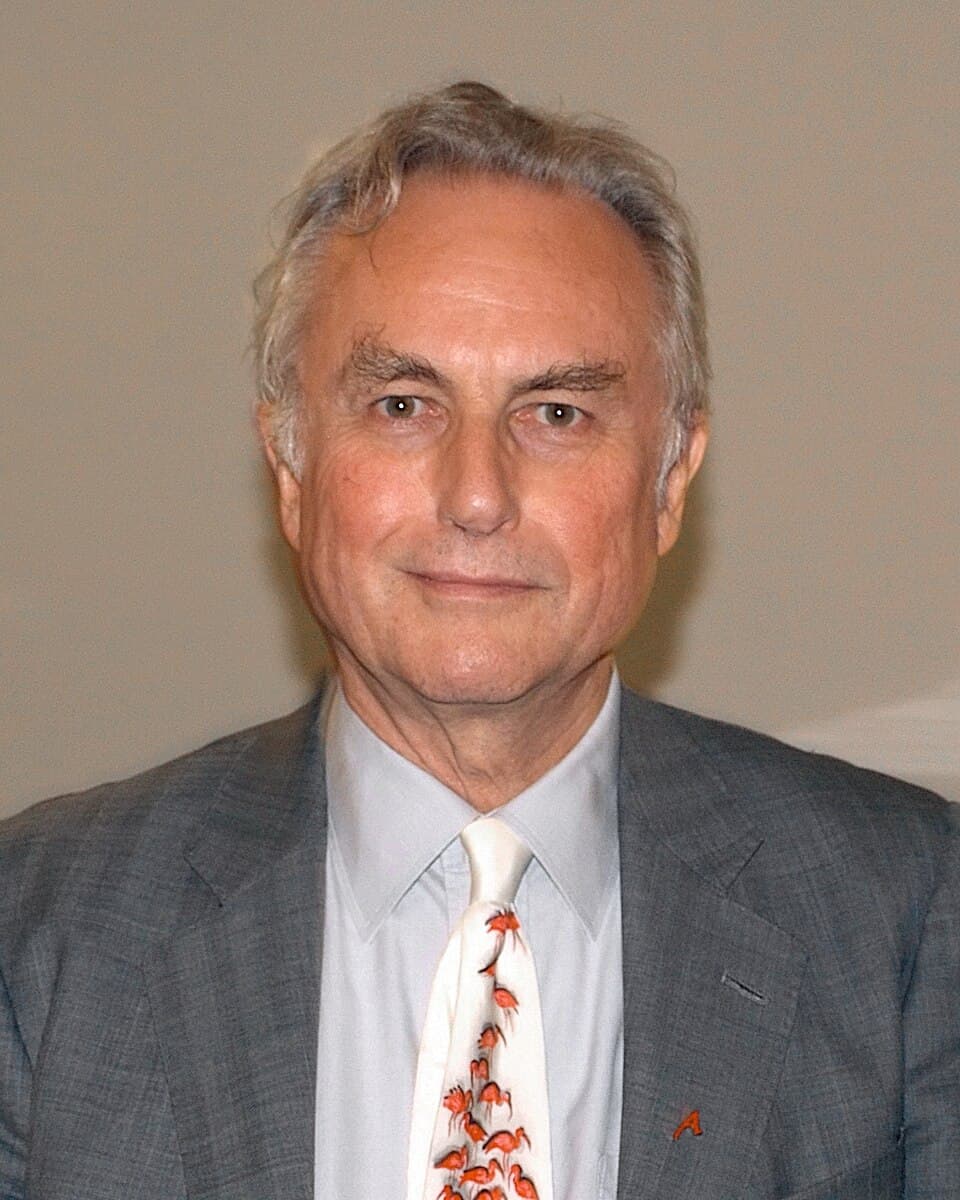
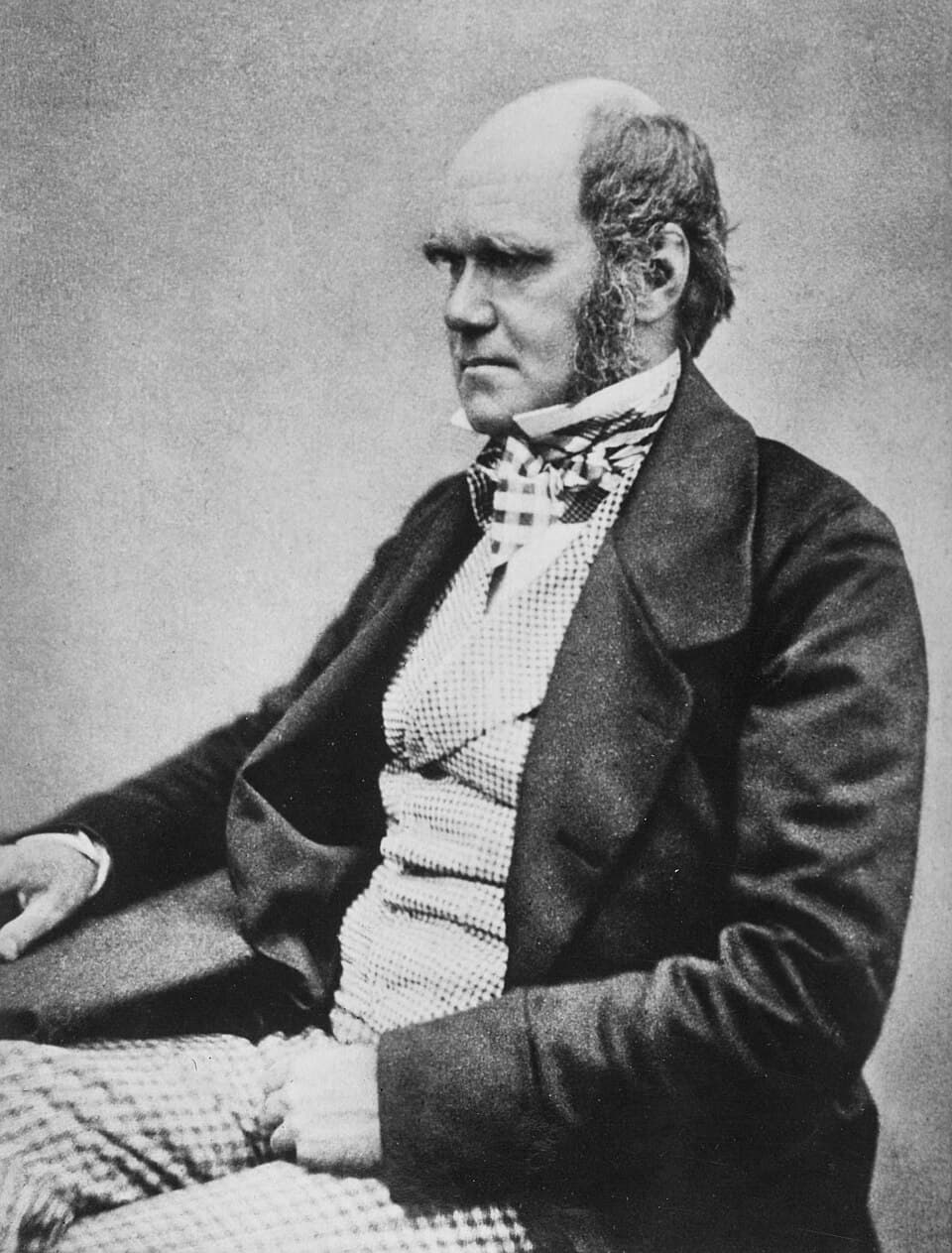
Dawkins wrote The Selfish Gene, and it rewired how Dennett — and how I — see design.8 The move is total: complexity is built bottom-up, by mindless cranes, never lowered from above by a skyhook. A horseshoe never makes a blacksmith; a pot never makes a potter — and yet we can't shake the intuition that a mind must come first. Darwin's dangerous idea is that it doesn't. Purpose grows up out of purposeless matter, no designer required.
Which means, Dennett says, we do have souls — they're just made of neurons, “blind little biorobots” that don't know and don't care, each doing its job, until enough of them on a team produce someone who does. You can make a conscious thing out of unconscious stuff. That is the entire emergence thesis in one sentence — the same one Yogācāra was circling fifteen centuries earlier from the inside.
And then the line that lit me up: Dennett calls humanity the planet's nervous system. For five billion years Earth was helpless against the sky. Now it has grown a layer that can see an asteroid coming and act to stop it — because minds compounded into a civilization that knows things no mind holds alone. That is my whole thesis in his mouth: intelligence climbing one more rung, from person to planet. The city that knows; the species that wakes up.
And then the last few minutes, which I can't get out of my head. They've moved outside, onto a wooden deck behind Dennett's house — a backyard in the American northeast that, the first time I saw it, stopped me cold, because it looked so much like the house I lived in for a few years in Ithaca. The same light through the same kind of trees, the same quiet. I was not expecting to be homesick in the middle of a philosophy talk.
Dennett tells Dawkins he loves the ending of Unweaving the Rainbow, and asks him to read it.9 Dawkins reads it aloud, and when he finishes Dennett answers with a single word — “Hallelujah”— an atheist's hallelujah, gratitude with no one to address it to and none needed. No self at the center, no designer overhead, no soul-stuff hidden anywhere, and somehow not bleak at all. The awe was never in spite of the explanation; the explanation is the awe. Here is what he read:
We can get outside the universe. I mean in the sense of putting a model of the universe inside our skulls. Not a superstitious, small-minded, parochial model filled with spirits and hobgoblins, astrology and magic, glittering with fake crocks of gold where the rainbow ends. A big model, worthy of the reality that regulates, updates and tempers it; a model of stars and great distances, where Einstein's noble spacetime curve upstages the curve of Yahweh's covenantal bow and cuts it down to size; a powerful model, incorporating the past, steering us through the present, capable of running far ahead to offer detailed constructions of alternative futures and allow us to choose.
Only human beings guide their behaviour by a knowledge of what happened before they were born and a preconception of what may happen after they are dead; thus only humans find their way by a light that illuminates more than the patch of ground they stand on.— P. B. and J. S. Medawar, The Life Science (1977)
The spotlight passes but, exhilaratingly, before doing so it gives us time to comprehend something of this place in which we fleetingly find ourselves and the reason that we do so. We are alone among animals in foreseeing our end. We are also alone among animals in being able to say before we die: Yes, this is why it was worth coming to life in the first place.
Now more than ever seems it rich to die,
To cease upon the midnight with no pain.
While thou art pouring forth thy soul abroad
In such an ecstasy!— John Keats, ‘Ode to a Nightingale’ (1820)A Keats and a Newton, listening to each other, might hear the galaxies sing.
— Richard Dawkins, the closing lines of Unweaving the Rainbow
I have no bigger model than that, and no better word than his. Only the hope that when the spotlight reaches me, I can say the same thing — yes, this is why it was worth coming to life — and mean it.
Notes & sources
- D. C. Dennett. Consciousness Explained.Little, Brown, 1991 — the Multiple Drafts model, the rejection of the Cartesian Theater, and the self as a “center of narrative gravity.”
- Vasubandhu. Triṃśikā-vijñaptimātratā (Thirty Verses on Consciousness-Only), 4th–5th c. — the Yogācāra account of the eight consciousnesses (aṣṭavijñāna): the five senses, mano-vijñāna, manas (self-grasping), and ālaya-vijñāna (the storehouse). See also the doctrine of anattā (no-self) in early Buddhism.
- R. Sutton. “The Bitter Lesson.” 2019 — general methods that leverage computation, search, and learning beat hand-engineered human knowledge. See also Sutton & Barto, Reinforcement Learning: An Introduction, 2nd ed., MIT Press, 2018.
- D. Silver, S. Singh, D. Precup, R. Sutton. “Reward Is Enough.” Artificial Intelligence 299, 2021 — the hypothesis that maximizing reward through experience can be sufficient to drive the emergence of general abilities.
- D. H. Meadows. Thinking in Systems: A Primer. Chelsea Green, 2008 — reinforcing and balancing feedback loops, and leverage points (goals and structure over parameters).
- G. Hinton. “Are We Creating Alien Beings?” Inaugural Judith Richter Lecture, MIT IMES, May 2026 — machine consciousness, and “subjective experience” as a linguistic operator rather than an inner referent.
- D. Dennett & R. Dawkins. “The Genius of Charles Darwin” — uncut conversation, Channel 4, 2008. youtu.be/5lfTPTFN94o. Cranes vs. skyhooks, souls made of neurons, humanity as the planet's nervous system, and secular gratitude.
- R. Dawkins. The Selfish Gene.Oxford University Press, 1976 — the gene's-eye view and the replicator/vehicle distinction that shaped Dennett's account of design.
- R. Dawkins. Unweaving the Rainbow: Science, Delusion and the Appetite for Wonder. Houghton Mifflin, 1998 — the closing passage Dawkins reads aloud in the conversation above.